On this page 9 sections
- What does "5% acetic acid" on the Geladjin Gummies label mean?
- How much acetic acid is in one Geladjin gummy?
- How does that compare with a tablespoon of household vinegar?
- Is the acetic acid figure a dose?
- Can the real acetic acid content vary from the label?
- Does the acid matter for teeth, throat and stomach?
- What does research say about acetic acid and apple cider vinegar?
- Who should ask a doctor before using Geladjin Gummies?
- FAQ
Geladjin acetic acid appears on the Geladjin Gummies label only as a percentage: "apple cider vinegar (5% acetic acid)" at 250 mg per gummy. If the 5% describes the 250 mg, one gummy carries about 12.5 mg of acetic acid (our math, an estimate). That is not a dose, and no source we have sets a reliable medicinal amount of vinegar.
What does "5% acetic acid" on the Geladjin Gummies label mean?
It most likely means that the apple cider vinegar ingredient is described as 5% acetic acid, the same kind of strength printed on household vinegar. The label does not say how the percentage was measured, so we could not confirm it.
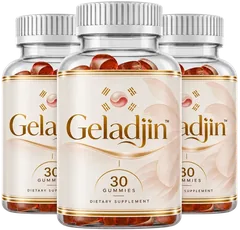
Acetic acid is the main acid in vinegar. The exact label line is "apple cider vinegar (5% acetic acid)", followed by 250 mg and a note that no daily value is established. We read this from the label photo ourselves.
Three things the label does not tell you:
- Whether 5% was measured on the liquid vinegar before it was dried or processed, or on the finished gummy.
- Whether the 250 mg is the vinegar as a liquid, a powder or a concentrate.
- Whether any lab checked the amount, since no certifier or laboratory is named on the bottle.
MedlinePlus says standardized apple cider vinegar products may contain 4% to 8% acetic acid and that composition varies1. So 5% sits inside the range MedlinePlus describes for vinegar products, which says nothing about how it behaves in a gummy.
How much acetic acid is in one Geladjin gummy?
About 12.5 mg per gummy, if the 5% applies to the 250 mg (our math, an estimate). The calculation is 250 mg times 0.05.
A 30-gummy bottle would then hold 30 times that estimate, from 7,500 mg of apple cider vinegar in total (our math). We could not confirm the percentage on the finished gummy, so regard both figures as estimates and not as measured values.
ToolVinegar math: a gummy against a spoonful
An estimate of the acetic acid in a gummy against a teaspoon or tablespoon of 5% household vinegar. It compares amounts only, not effects.
This tool needs JavaScript turned on.
The vinegar math tool above sets the label's 250 mg and 5% next to a tablespoon of 5% household vinegar and shows how many gummies it would take to match that tablespoon. It also states plainly why the comparison is not a dose.
| Amount | Acetic acid (about) |
|---|---|
| 1 gummy | 12.5 mg |
| 1 teaspoon of 5% vinegar | 250 mg |
| 1 tablespoon of 5% vinegar | 750 mg |
An amount comparison only. We could not confirm how the label's percentage was measured, and it is not a dose.
How does that compare with a tablespoon of household vinegar?
A tablespoon of 5% household vinegar holds about 750 mg of acetic acid, roughly 60 times the estimate for one gummy (our math). That is about 60 gummies per tablespoon.
The arithmetic: 5% means 5 g of acetic acid per 100 mL, and a tablespoon is about 15 mL, so about 750 mg. Against about 12.5 mg per gummy, that is about 60 gummies for one tablespoon.
| One Geladjin gummy | One tablespoon of 5% vinegar | |
|---|---|---|
| Vinegar amount | 250 mg (label) | about 15 mL |
| Acetic acid | about 12.5 mg (our math) | about 750 mg (our math) |
| Form | pectin-based gummy | liquid |
| Added sugar | 3 g (label) | we could not confirm a figure |
Please do not read this table as advice to swallow 60 gummies or a spoonful of vinegar. The label says to take one gummy daily and not to exceed the recommended dose. The numbers only help you see how different the two things are in scale. For the broader comparison, see our gummy vs liquid page.
Order
Geladjin Gummies packages and prices
Prices reported for the sales page, which match the owner pack, when we checked on November 28, 2026; confirm at the live checkout. Order links here open the sales page named in the owner pack; it did not load for us, so check it before you pay.
Pick a package to see the total, cost per day and the day-60 date.
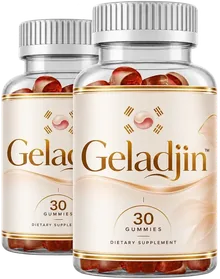
2 bottles
60 gummies · 60 days at 1 a day
$79per bottle
- Total
- $158
- Per day
- $2.63
- Shipping
- Shipping added at checkout (amount not published)
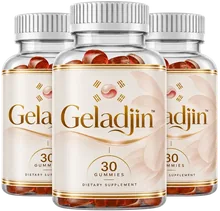
3 bottles
90 gummies · 90 days at 1 a day
$69per bottle
- Total
- $207
- Per day
- $2.30
- Shipping
- Free U.S. shipping
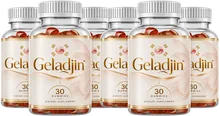
6 bottles
180 gummies · 180 days at 1 a day
$49per bottle
- Total
- $294
- Per day
- $1.63
- Shipping
- Free shipping reported
- Ask first if you take medicineDiabetes medicine or insulin, a water pill, digoxin, or low potassium: apple cider vinegar is on the label, and MedlinePlus lists these.
- Pick a package30 gummies a bottle, one a day by the label. 3 bottles ship free in the U.S., 6 bottles ship free as reported, and shipping on 2 is added at checkout.
- Read the totalCheck the address bar, the retailer name, the total and any add-on box. Keep the receipt.
- Mark day 60Plan on 60 days from the purchase date: we could not confirm when the seller starts counting. Keep the tracking email.


 Badges supplied by the seller, shown as supplied. None names a certifying body, lab or number; what each one would need to mean is on the badges page.
 Payment logos come from the seller's pack; we could not confirm which methods the checkout accepts. Order links are marked sponsored. If you take diabetes medicine, insulin, a water pill or digoxin, ask your doctor first.
Is the acetic acid figure a dose?
No. MedlinePlus says there is not enough reliable information to set a medicinal dose of apple cider vinegar1. A percentage on a label tells you the strength, not how much of anything is right for a person.
The 12.5 mg number is our arithmetic from two label figures. It is not a measured value, it is not a recommended amount, and it is not a comparison of effect. We found no study of Geladjin Gummies, and no study that compared a gummy with a spoonful of liquid.
It also works the other way. Because the amounts are so different, we will not say the gummy is "weaker" or "stronger" than liquid vinegar in any sense that matters to you. We have no source that links acetic acid at either amount to a result for a person using this product.
Can the real acetic acid content vary from the label?
It can, according to what Operation Supplement Safety found. OPSS reports that two studies of apple cider vinegar supplement tablets found a range of contents and acidity, up to 10 times that of household vinegar2.
OPSS also says supplement labels do not consistently report ingredient amounts, and that without lab testing the actual ingredients and amounts are unknown2. Those studies were of tablets, not gummies, and OPSS says there are no other studies of supplement contents or acidity. So we cannot say Geladjin Gummies vary, and we cannot say they do not.
A fair reader might ask what to do with that uncertainty. The practical answer is modest: keep the bottle, keep the receipt, and compare the printed lines with what this site describes. The FTC advises keeping records of an online order3, and a photo of your own label is a useful record if you ever need to ask the seller a question.
This is why the label match matters. Check that your bottle shows the same 250 mg and 5% lines, and look for any certification mark. OPSS suggests checking labels for third-party certification2; we found no certifier named on the Geladjin label or in the owner pack's badges.
Does the acid matter for teeth, throat and stomach?
Possibly, and we could not confirm it for the gummy. OPSS lists possible tooth erosion among the possible side effects of apple cider vinegar2, and the MedlinePlus page does not discuss gummies, tooth enamel or reflux1.
At about 12.5 mg per gummy (our math), the acid is small next to a spoonful of liquid, but we have no source that says what that means for teeth. The gummy also contains citric acid, listed among the other ingredients, which adds its own acidity; we found no source on it beyond the label.
If you have tooth-enamel concerns, heartburn or reflux, ask a dentist, pharmacist or doctor before use. If you want to dig further, our teeth and throat page goes through this in more detail, and the apple cider vinegar page covers the ingredient itself.
What does research say about acetic acid and apple cider vinegar?
MedlinePlus says there is no good scientific evidence to support uses such as obesity, diabetes, athletic performance or kidney stones, and not enough reliable information to say whether apple cider vinegar might be helpful1. Acetic acid is the main acid in that vinegar, but these statements concern the whole vinegar, not the acid alone and not a gummy.
A well-known trial of apple cider vinegar and weight was retracted. BMJ Group retracted a small trial in Lebanese adolescents and young adults, with a notice dated September 23, 2025, citing concerns about the statistical analysis, implausible values, the reliability of the raw data, inadequate methods and no prospective registration4. That is a fact about one study. It does not say vinegar is harmful or useless, and it tells us nothing either way about Geladjin Gummies.
What remains is a gap. We found no study of Geladjin Gummies, no study of a vinegar gummy against liquid vinegar, and no source that ties a particular amount of acetic acid to an outcome. When a page or an ad suggests otherwise, ask what it is citing.
Who should ask a doctor before using Geladjin Gummies?
Anyone who takes diabetes medicine or insulin, a diuretic or digoxin, or has low potassium should ask a doctor first. MedlinePlus says apple cider vinegar might lower blood sugar and potassium and lists interactions with those medicines1.
MedlinePlus also says not to use apple cider vinegar if you have low potassium1. A small acetic acid number does not remove that caution, because we do not know how the gummy behaves in a body and we found no study of it. Never start, change or stop a medicine because of anything on this page.
Pregnant, nursing, under 18, or have a known medical condition? The label says to consult a physician before using this or any dietary supplement.
For the rest of the label, see the supplement facts page. For what research does and does not cover, see our science page.
Frequently asked questions
What is the Geladjin acetic acid content?
The Geladjin Gummies label prints "5% acetic acid" beside 250 mg of apple cider vinegar. If the 5% applies to the 250 mg, that is about 12.5 mg of acetic acid per gummy (our math).
Is 5 percent acetic acid in a Geladjin gummy the same as in vinegar?
The strength on the label matches the 5% printed on many household vinegars, but the amounts differ a lot. A tablespoon of 5% vinegar holds about 750 mg of acetic acid, about 60 times one gummy (our math).
How much acetic acid in Geladjin is in a full bottle?
Thirty times the per-gummy estimate, from 7,500 mg of apple cider vinegar in a 30-gummy bottle (our math, an estimate). We could not confirm how the percentage was measured.
Is Geladjin acidity the same as liquid apple cider vinegar?
We could not confirm that. The label gives a percentage but no acidity measurement for the finished gummy, and OPSS reports that supplement contents and acidity varied up to 10 times household vinegar in two studies of tablets2.
Does Geladjin apple cider vinegar gummy acidity affect teeth?
OPSS lists possible tooth erosion as a possible side effect of apple cider vinegar2, but we could not confirm it for Geladjin Gummies. Ask a dentist if you have enamel concerns.
Sources for this page
D1 = the Geladjin sales page named in the owner pack (it did not load for us). D2 = an independent affiliate page that read the order page. S = U.S. government and NIH sources. Label facts come from the seller's label photo, which we read ourselves.
- S1 Apple cider vinegar (MedlinePlus herbs and supplements). MedlinePlus, U.S. National Library of Medicine. medlineplus.gov/druginfo/natural/816.html
- S3 Apple cider vinegar in dietary supplements (Operation Supplement Safety). Operation Supplement Safety (U.S. Department of Defense). www.opss.org/article/apple-cider-vinegar-dietary-supplements
- S13 Online Shopping. Federal Trade Commission (consumer advice). consumer.ftc.gov/articles/online-shopping
- S4 BMJ Group retracts trial on apple cider vinegar and weight loss (September 2025). BMJ Group (via EurekAlert news release). www.eurekalert.org/news-releases/1099052
Last updated November 28, 2026. Facts come from the label photo we read, the owner pack, an affiliate page that read the order page and the public U.S. sources above; prices were checked November 28, 2026. Spotted an error? Email [email protected].