On this page 9 sections
- Can you fairly compare Geladjin Gummies with liquid apple cider vinegar?
- What does the side-by-side comparison show?
- How does the acetic acid compare?
- What about sugar and calories?
- Is the gummy or the liquid easier on teeth and throat?
- Can you tell what is actually in a vinegar gummy or pill?
- What does research say about gummies versus liquid?
- Who should ask a doctor before using either form?
- FAQ
Apple cider vinegar gummies vs liquid is a comparison the label and some arithmetic can only partly answer, and we will not say either form is better. One Geladjin gummy lists 250 mg of apple cider vinegar (5% acetic acid), about 12.5 mg of acetic acid by our math, against about 750 mg in a tablespoon of 5% household vinegar. We found no study of Geladjin Gummies and no study that compares a gummy with liquid vinegar.
Can you fairly compare Geladjin Gummies with liquid apple cider vinegar?
Only on a few facts: what the label prints, what our arithmetic gives, and what safety sources say about vinegar. We cannot compare results, because we found no study of the product and no head-to-head study of the two forms.
The comparison below is built from three kinds of information, and we mark each one. Label facts come from the photo we read ourselves. "Our math" means we multiplied label numbers. Source statements carry a citation and describe vinegar or vinegar supplements as an ingredient, not Geladjin Gummies.
What we will not do is say a gummy is "as good as" a spoonful of vinegar, or worse. MedlinePlus says there is not enough reliable information to set a medicinal dose of apple cider vinegar1, so we have no yardstick to make that call. Anyone who says otherwise should be asked to name the study, and to say whether it tested the product or only the ingredient.
What does the side-by-side comparison show?
It shows that the two forms differ in scale, sugar, packaging and how much can be checked, and it shows gaps where we could not confirm a fact. Here is the table.
| Point | Geladjin Gummies | A spoonful of liquid vinegar |
|---|---|---|
| Form | Pectin-based gummy (label, seller's badge) | Liquid |
| Vinegar amount | 250 mg per gummy (label) | About 15 mL per tablespoon |
| Acetic acid | About 12.5 mg per gummy (our math) | About 750 mg per tablespoon of 5% vinegar (our math) |
| Added sugar | 3 g per gummy (label) | We could not confirm a figure |
| Calories | 10 per gummy (label) | We could not confirm a figure |
| Suggested use | One gummy daily with 8 oz. of water (label) | No reliable medicinal dose1 |
| Teeth | We could not confirm | Possible tooth erosion listed for vinegar2 |
| Contents checked | No certifier or lab named on the label | Household vinegar is typically about 4 to 7% acidity2 |
We left the sugar and calories cells for liquid vinegar unconfirmed on purpose. We have no figure for a particular bottle of vinegar, and we will not claim it has none.
| Amount | Acetic acid (about) |
|---|---|
| 1 gummy | 12.5 mg |
| 1 teaspoon of 5% vinegar | 250 mg |
| 1 tablespoon of 5% vinegar | 750 mg |
An amount comparison only. We could not confirm how the label's percentage was measured, and it is not a dose.
How does the acetic acid compare?
A tablespoon of 5% household vinegar holds about 750 mg of acetic acid, about 60 times the roughly 12.5 mg we estimate for one gummy (our math). That is about 60 gummies per tablespoon.
The arithmetic: 250 mg times 5% gives 12.5 mg per gummy, if the label's 5% describes the 250 mg. A tablespoon is about 15 mL, and 5% means 5 g per 100 mL, so about 750 mg. We could not confirm how the label's percentage was measured, so regard 12.5 mg as an estimate.
This is not an invitation to swap one for the other. The size of the gap says that the two are not stand-ins for each other, and that is all it says. Our acetic acid page shows the math step by step and has the vinegar math tool.
MedlinePlus says standardized apple cider vinegar products may have 4% to 8% acetic acid and that composition varies1. A label that says 5% is inside that range, which tells you about the strength of the vinegar ingredient and nothing about what it does.
Order
Geladjin Gummies packages and prices
Prices reported for the sales page, which match the owner pack, when we checked on November 28, 2026; confirm at the live checkout. Order links here open the sales page named in the owner pack; it did not load for us, so check it before you pay.
Pick a package to see the total, cost per day and the day-60 date.
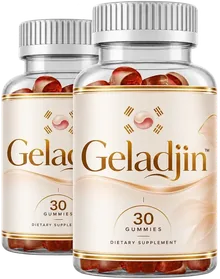
2 bottles
60 gummies · 60 days at 1 a day
$79per bottle
- Total
- $158
- Per day
- $2.63
- Shipping
- Shipping added at checkout (amount not published)
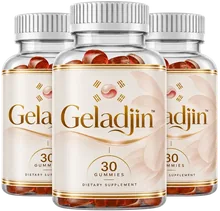
3 bottles
90 gummies · 90 days at 1 a day
$69per bottle
- Total
- $207
- Per day
- $2.30
- Shipping
- Free U.S. shipping
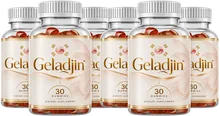
6 bottles
180 gummies · 180 days at 1 a day
$49per bottle
- Total
- $294
- Per day
- $1.63
- Shipping
- Free shipping reported
- Ask first if you take medicineDiabetes medicine or insulin, a water pill, digoxin, or low potassium: apple cider vinegar is on the label, and MedlinePlus lists these.
- Pick a package30 gummies a bottle, one a day by the label. 3 bottles ship free in the U.S., 6 bottles ship free as reported, and shipping on 2 is added at checkout.
- Read the totalCheck the address bar, the retailer name, the total and any add-on box. Keep the receipt.
- Mark day 60Plan on 60 days from the purchase date: we could not confirm when the seller starts counting. Keep the tracking email.


 Badges supplied by the seller, shown as supplied. None names a certifying body, lab or number; what each one would need to mean is on the badges page.
 Payment logos come from the seller's pack; we could not confirm which methods the checkout accepts. Order links are marked sponsored. If you take diabetes medicine, insulin, a water pill or digoxin, ask your doctor first.
What about sugar and calories?
The gummy carries 3 g of added sugars and 10 calories each, which the label lists. For liquid vinegar we could not confirm a figure, so we make no claim either way.
The 3 g is 6% of the 50 g Daily Value on the label. The Dietary Guidelines advise keeping added sugars under 10% of calories, about 50 grams on a 2,000-calorie diet, and the American Heart Association suggests 24 grams for most women and 36 for most men3. The gummy's sugar is small and still counts. Our added sugar page has the percentages.
If sugar matters for your health, that is a real difference between the two forms and a reason to ask your doctor. It is a difference in one number on the label, though, and we are not ranking the forms on it.
Is the gummy or the liquid easier on teeth and throat?
We could not confirm that either is easier. Operation Supplement Safety lists possible tooth erosion among possible side effects of apple cider vinegar2, and MedlinePlus does not discuss gummies, tooth enamel or reflux1.
Here is what we do and do not know:
- The acetic acid in a gummy is much smaller than in a spoonful of liquid vinegar (our math), but we have no source linking that difference to teeth.
- The gummy also lists citric acid among its other ingredients, and sugar, and we found no source on either for teeth.
- NCCIH lists heartburn among side effects of ginger supplements, which the gummy also contains at 1 mg4. We could not confirm it for the gummy.
- For skin, MedlinePlus says vinegar can cause chemical burns1; that matters for liquid and has no bearing on swallowing a gummy as the label directs.
If you have tooth-enamel concerns, reflux or heartburn, ask a dentist or doctor before using either form. Our teeth and throat page covers the questions.
Can you tell what is actually in a vinegar gummy or pill?
Not from the label alone. Operation Supplement Safety says supplement labels do not consistently report ingredient amounts, and without lab testing the actual ingredients and amounts are unknown2.
OPSS reports that two studies of apple cider vinegar supplement tablets found a range of contents and acidity, up to 10 times household vinegar, and that no other studies of supplement contents or acidity exist2. Those studies concerned tablets, not gummies, so we cannot say Geladjin Gummies vary or do not.
This is the strongest real point in the comparison. A bottle of household vinegar states its acidity, and the OPSS page puts typical household vinegar at about 4 to 7% acidity2. A supplement states an amount, and you must trust it. OPSS suggests checking for third-party certification2; we found none named on the Geladjin label, and the seller's badges name no certifier or lab. FDA does not approve supplements before sale, and the company is responsible for safety and truthful labels5.
What does research say about gummies versus liquid?
Nothing that we found. We found no study of Geladjin Gummies, no study of any vinegar gummy against liquid vinegar, and no source that sets a reliable amount of vinegar for any purpose.
What exists is research on vinegar as an ingredient, and it is thin. MedlinePlus says there is no good scientific evidence for uses such as obesity, diabetes, athletic performance and kidney stones1. OPSS says the evidence for the uses marketed for apple cider vinegar is of low quality and the studies are small2. A widely quoted weight trial was retracted by BMJ Group, with a notice dated September 23, 2025; BMJ said the results should no longer be referenced or used6. That fact concerns one study. It does not say vinegar is harmful, and it does not say anything about this gummy.
For the wider picture, see our science page and the apple cider vinegar page.
Who should ask a doctor before using either form?
Anyone who takes diabetes medicine or insulin, a diuretic or digoxin, or has low potassium should ask a doctor before using Geladjin Gummies or liquid vinegar. MedlinePlus says apple cider vinegar might lower blood sugar and potassium, and lists interactions with those medicines1.
MedlinePlus also says not to use apple cider vinegar if you have low potassium1. The form does not change the ingredient. Never start, change or stop a medicine because of this page.
Pregnant, nursing, under 18, or have a known medical condition? The label says to consult a physician before using this or any dietary supplement.
Frequently asked questions
How does Geladjin vs liquid apple cider vinegar compare on acetic acid?
One Geladjin gummy carries about 12.5 mg of acetic acid, while a tablespoon of 5% household vinegar carries about 750 mg, about 60 times as much (our math). We could not confirm how the label's 5% was measured.
Are apple cider vinegar gummies like Geladjin as good as liquid for you?
We could not confirm that, and we will not say either is better. MedlinePlus says there is not enough reliable information to set a medicinal dose of apple cider vinegar1, and we found no head-to-head study.
Is a Geladjin gummy vs shot of vinegar the same amount?
No. A tablespoon of 5% vinegar holds about 60 times the acetic acid we estimate for one Geladjin gummy (our math). The two are not stand-ins for each other.
Is Geladjin vs vinegar pills a fair comparison?
We could not confirm that, because we found no study of Geladjin Gummies or of gummies against pills. OPSS reports that two studies of vinegar tablets found contents and acidity up to 10 times household vinegar2, which is a reason to check labels.
Do Geladjin Gummies have the same side effects as liquid vinegar?
We could not confirm that. Possible side effects listed for vinegar include low potassium, skin irritation, chemical burns and possible tooth erosion2, and none has been confirmed for the gummy.
Sources for this page
D1 = the Geladjin sales page named in the owner pack (it did not load for us). D2 = an independent affiliate page that read the order page. S = U.S. government and NIH sources. Label facts come from the seller's label photo, which we read ourselves.
- S1 Apple cider vinegar (MedlinePlus herbs and supplements). MedlinePlus, U.S. National Library of Medicine. medlineplus.gov/druginfo/natural/816.html
- S3 Apple cider vinegar in dietary supplements (Operation Supplement Safety). Operation Supplement Safety (U.S. Department of Defense). www.opss.org/article/apple-cider-vinegar-dietary-supplements
- S5 Added Sugar (The Nutrition Source, Harvard T.H. Chan School of Public Health). Harvard T.H. Chan School of Public Health. nutritionsource.hsph.harvard.edu/what-should-you-eat/added-sugar
- S2 Ginger (NCCIH). National Center for Complementary and Integrative Health (NIH). www.nccih.nih.gov/health/ginger
- S8 Dietary Supplements: What You Need to Know (FDA 101). U.S. Food and Drug Administration. www.fda.gov/consumers/consumer-updates/fda-101-dietary-supplements
- S4 BMJ Group retracts trial on apple cider vinegar and weight loss (September 2025). BMJ Group (via EurekAlert news release). www.eurekalert.org/news-releases/1099052
Last updated November 28, 2026. Facts come from the label photo we read, the owner pack, an affiliate page that read the order page and the public U.S. sources above; prices were checked November 28, 2026. Spotted an error? Email [email protected].