On this page 9 sections
- How much apple cider vinegar is in Geladjin Gummies?
- What does MedlinePlus say about apple cider vinegar?
- What does Operation Supplement Safety say about vinegar supplements?
- What about the retracted apple cider vinegar trial?
- Why does Geladjin Gummies not claim any benefit from the vinegar?
- Who should ask a doctor before using apple cider vinegar gummies?
- Does the sugar and acid in a gummy matter too?
- How does a gummy compare with liquid vinegar?
- FAQ
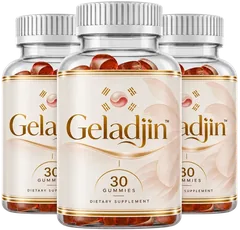
The Geladjin apple cider vinegar in each gummy is listed on the label as 250 mg of apple cider vinegar (5% acetic acid), with the Daily Value not established. Government and university-linked sources describe vinegar on its own, in other forms and at other amounts, and not Geladjin Gummies.
We found no study of the product. This page sets the label figure next to what MedlinePlus and Operation Supplement Safety say, including what they do not say.
How much apple cider vinegar is in Geladjin Gummies?
The label says each gummy has 250 mg of apple cider vinegar (5% acetic acid), and a 30-gummy jar holds 7,500 mg by our math. The panel gives no Daily Value for it, meaning no daily reference amount is established.
The label's one gummy a day means 250 mg a day if you follow it, and it says not to exceed the recommended dose. The ginger sits next to it on the panel at 1 mg; see the ingredients page for the full list.
Put another way, the label gives you one fixed amount in one fixed form, and nothing else about the vinegar: no source of the apples, no process and no testing statement. We could not confirm any of those from the label or the pages we could read.
The 5% figure describes acidity. Our reading, an estimate, is that it describes the 250 mg, which would put about 12.5 mg of acetic acid in a gummy. We could not confirm how the label's percentage was measured, and the acetic acid page explains the arithmetic.
What does MedlinePlus say about apple cider vinegar?
MedlinePlus says there is no good scientific evidence for obesity, diabetes, athletic performance or kidney stones as uses of apple cider vinegar, and not enough reliable information to say whether it might be helpful1. That page is about vinegar, not gummies, and it does not mention gummies.
It also says apple cider vinegar may lower after-meal blood sugar1. The label makes no such claim, and we make none.
On safety, MedlinePlus says food amounts are likely safe, medicinal use is possibly safe short term, and large amounts over a long time are possibly unsafe and may cause low potassium1. It says skin use can cause chemical burns, which concerns applying vinegar to the skin, not swallowing a gummy1.
| Topic | What MedlinePlus says |
|---|---|
| Uses with no good evidence | Obesity, diabetes, athletic performance, kidney stones1 |
| Food amounts | Likely safe1 |
| Medicinal use | Possibly safe short term; large amounts long term possibly unsafe1 |
| Potassium | Large amounts may cause low potassium; do not use with low potassium1 |
| Dose | Not enough reliable information to set a medicinal dose1 |
| Acetic acid in standardized products | 4% to 8%; composition varies1 |
| Amount | Acetic acid (about) |
|---|---|
| 1 gummy | 12.5 mg |
| 1 teaspoon of 5% vinegar | 250 mg |
| 1 tablespoon of 5% vinegar | 750 mg |
An amount comparison only. We could not confirm how the label's percentage was measured, and it is not a dose.
What does Operation Supplement Safety say about vinegar supplements?
Operation Supplement Safety says vinegar is marketed for appetite, weight, blood sugar, cholesterol, digestion and immunity, and that the evidence for these is of low quality and comes from small studies2. It also says no research supports any health benefit from vinegar as a food or supplement2.
On contents, it says supplement labels do not consistently report amounts, and that two studies of vinegar supplement tablets found a range of contents and acidity, up to 10 times household vinegar2. No other studies of supplement contents or acidity are cited, and without lab testing the actual ingredients and amounts are unknown2.
It lists possible side effects of low potassium, skin irritation, chemical burns and possible tooth erosion, and advises checking labels for third-party certification2. The Geladjin label names no certifier.
We could not confirm how this applies to a gummy. The page's studies were of tablets, not Geladjin Gummies.
Order
Geladjin Gummies packages and prices
Prices reported for the sales page, which match the owner pack, when we checked on November 28, 2026; confirm at the live checkout. Order links here open the sales page named in the owner pack; it did not load for us, so check it before you pay.
Pick a package to see the total, cost per day and the day-60 date.
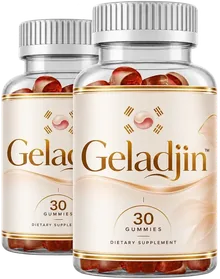
2 bottles
60 gummies · 60 days at 1 a day
$79per bottle
- Total
- $158
- Per day
- $2.63
- Shipping
- Shipping added at checkout (amount not published)
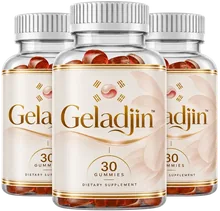
3 bottles
90 gummies · 90 days at 1 a day
$69per bottle
- Total
- $207
- Per day
- $2.30
- Shipping
- Free U.S. shipping
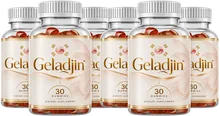
6 bottles
180 gummies · 180 days at 1 a day
$49per bottle
- Total
- $294
- Per day
- $1.63
- Shipping
- Free shipping reported
- Ask first if you take medicineDiabetes medicine or insulin, a water pill, digoxin, or low potassium: apple cider vinegar is on the label, and MedlinePlus lists these.
- Pick a package30 gummies a bottle, one a day by the label. 3 bottles ship free in the U.S., 6 bottles ship free as reported, and shipping on 2 is added at checkout.
- Read the totalCheck the address bar, the retailer name, the total and any add-on box. Keep the receipt.
- Mark day 60Plan on 60 days from the purchase date: we could not confirm when the seller starts counting. Keep the tracking email.


 Badges supplied by the seller, shown as supplied. None names a certifying body, lab or number; what each one would need to mean is on the badges page.
 Payment logos come from the seller's pack; we could not confirm which methods the checkout accepts. Order links are marked sponsored. If you take diabetes medicine, insulin, a water pill or digoxin, ask your doctor first.
What about the retracted apple cider vinegar trial?
A widely quoted trial of apple cider vinegar and body weight was retracted. BMJ Group retracted a March 2024 trial in Lebanese adolescents and young adults, with a notice dated September 23, 20253.
The reasons given were concerns about the statistical analysis, implausible statistical values, the reliability of the raw data, inadequate reporting of methods and no prospective trial registration3. Statisticians could not replicate the results, and BMJ said the results should no longer be referenced or used3.
That is a fact about one study. It does not show that vinegar is harmful, and it does not show that it is useless, and it says nothing about Geladjin Gummies either way. It does explain why we do not quote that trial. Our page on the retracted study has the details.
Why does Geladjin Gummies not claim any benefit from the vinegar?
The label prints no benefit claim for the vinegar or for anything else. It lists the amount, and it carries the standard FDA statement that the statements on it have not been evaluated by the Food and Drug Administration.
U.S. rules say health claims must be truthful and backed by competent and reliable scientific evidence, and testimonials cannot substitute for it4. The evidence the sources describe is about vinegar on its own, and we found none about the product.
That is also why this page reads like a list of what is missing. It is a deliberate choice: when sources are about another form of the ingredient, we say so each time instead of borrowing their words for the gummy.
So we do not suggest that the 250 mg does or does not do anything. We also do not say whether 250 mg is a lot or a little. The sources we have give no reliable medicinal dose for vinegar1, so there is no figure to compare it with.
| Item | What the sources say |
|---|---|
| Vinegar for weight or blood sugar | Not enough reliable evidence (MedlinePlus) |
| Ginger | Some evidence for nausea of pregnancy; no doses given for comparison (NCCIH) |
| Excess added sugar | Linked to weight gain, type 2 diabetes and heart disease (CDC, Harvard) |
| A 2024 vinegar trial | Retracted September 23, 2025 (BMJ Group) |
| Geladjin Gummies | No study found |
Research covers each ingredient alone, usually for other uses and at other amounts.
Who should ask a doctor before using apple cider vinegar gummies?
If you take diabetes medicine or insulin, a diuretic (a "water pill") or digoxin, or you have low potassium, ask your doctor before using Geladjin Gummies. MedlinePlus says apple cider vinegar might lower blood sugar and potassium and lists interactions with those medicines, and it says not to use apple cider vinegar if you have low potassium1.
The interactions it lists are specific:
- Digoxin: low potassium may raise digoxin side effects1.
- Insulin and diuretics: both can lower potassium1.
- Antidiabetes drugs: blood sugar might drop too low, and it should be monitored closely1.
- Supplements that lower blood sugar, such as aloe, bitter melon, cassia cinnamon, chromium and prickly pear cactus1.
Never start, change or stop a medicine because of this page. If you are pregnant, nursing, under 18 or have a known medical condition, the label says to consult a physician. MedlinePlus says there is not enough reliable information to know whether medicinal use is safe in pregnancy or breastfeeding, and to stick to food amounts1. The medications page lists questions to bring.
Does the sugar and acid in a gummy matter too?
Each gummy has 3 g of added sugars, which the label gives as 6% of the Daily Value, and it lists citric acid among the other ingredients. Both are on the label, and neither is about the vinegar alone.
The sugar counts toward the day's added sugar. The Dietary Guidelines advise limiting added sugars to less than 10% of calories, about 50 g a day on 2,000 calories5. Our math: 3 g is 8.3% of the American Heart Association's 36 g and 12.5% of its 24 g5.
Operation Supplement Safety lists possible tooth erosion for vinegar2. We could not confirm whether this applies to the gummy, and we found no dental source on gummies. If you have a tooth-enamel concern, ask a dentist. See the side effects page for what sources list.
How does a gummy compare with liquid vinegar?
We cannot say one is better than the other. Our math, an estimate, is that if the label's 5% describes the 250 mg, one gummy carries about 12.5 mg of acetic acid, and a tablespoon of 5% household vinegar carries about 750 mg, or about 60 gummies.
That is arithmetic about amounts, not a comparison of effect, and MedlinePlus says there is no reliable medicinal dose1. We found no study of Geladjin Gummies and none that compares a gummy with a liquid. Our gummy vs liquid page sets out what can and cannot be compared.
Research on vinegar studied it on its own, usually for other uses and at other amounts. It does not tell us what Geladjin Gummies do, and the label makes no benefit claim.
Frequently asked questions
What is the Geladjin apple cider vinegar content?
The label lists 250 mg of apple cider vinegar (5% acetic acid) per gummy, with the Daily Value not established. A 30-gummy jar holds 7,500 mg by our math, and we found no study of the product.
Where does the Geladjin apple cider vinegar come from?
What should I know about apple cider vinegar and diabetes medicine before Geladjin?
Ask first. MedlinePlus says combining apple cider vinegar with antidiabetes drugs might drop blood sugar too low, so ask your doctor first and never change a medicine on your own1.
What does apple cider vinegar low potassium mean for Geladjin Gummies users?
MedlinePlus says not to use apple cider vinegar if you have low potassium1. Ask your doctor before using Geladjin Gummies if that applies to you.
How much is the 250 mg apple cider vinegar gummy in Geladjin worth in acetic acid?
Our math, an estimate, is about 12.5 mg of acetic acid per gummy if the 5% describes the 250 mg. That is not a dose, and we could not confirm how the percentage was measured.
Sources for this page
D1 = the Geladjin sales page named in the owner pack (it did not load for us). D2 = an independent affiliate page that read the order page. S = U.S. government and NIH sources. Label facts come from the seller's label photo, which we read ourselves.
- S1 Apple cider vinegar (MedlinePlus herbs and supplements). MedlinePlus, U.S. National Library of Medicine. medlineplus.gov/druginfo/natural/816.html
- S3 Apple cider vinegar in dietary supplements (Operation Supplement Safety). Operation Supplement Safety (U.S. Department of Defense). www.opss.org/article/apple-cider-vinegar-dietary-supplements
- S4 BMJ Group retracts trial on apple cider vinegar and weight loss (September 2025). BMJ Group (via EurekAlert news release). www.eurekalert.org/news-releases/1099052
- S12 Health Products Compliance Guidance. Federal Trade Commission. www.ftc.gov/business-guidance/resources/health-products-compliance-guidance
- S5 Added Sugar (The Nutrition Source, Harvard T.H. Chan School of Public Health). Harvard T.H. Chan School of Public Health. nutritionsource.hsph.harvard.edu/what-should-you-eat/added-sugar
Last updated November 28, 2026. Facts come from the label photo we read, the owner pack, an affiliate page that read the order page and the public U.S. sources above; prices were checked November 28, 2026. Spotted an error? Email [email protected].