On this page 10 sections
- Does Geladjin Gummies make any blood sugar claim?
- What do the sources say about apple cider vinegar and blood sugar?
- Can diabetics take Geladjin Gummies?
- What is the difference between a possible effect and a claim?
- What about the sugar in each gummy?
- How do low potassium and diuretics fit in?
- What is not known about the gummy and blood sugar?
- What should you bring to your doctor or pharmacist?
- Who should ask a doctor before using Geladjin Gummies?
- FAQ
The label on Geladjin Gummies makes no blood sugar claim, and the main fact for anyone with diabetes is a caution: MedlinePlus lists interactions between apple cider vinegar and diabetes medicines. This page covers what the label says, what the sources say, and the 3 g of added sugar in each gummy.
If you take diabetes medicine or insulin, ask your doctor before using Geladjin Gummies. We found no study of the gummy, and nothing here is medical advice.
Does Geladjin Gummies make any blood sugar claim?
No. The label we read prints no blood sugar claim, no diabetes claim and no promise about any result.
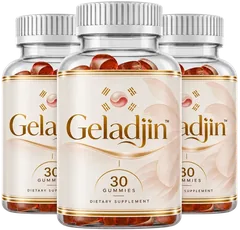
What it does print is the Supplement Facts panel: per gummy, 250 mg of apple cider vinegar (5% acetic acid), 1 mg of ginger dry extract, 10 calories, 3 g of total carbohydrates and 3 g of added sugars. It also prints the standard FDA disclaimer, which says the FDA has not evaluated its statements and that the product is not meant to address any disease.
The owner pack says to confirm claims against the bottle only. On blood sugar the bottle makes none, so any such claim you see for Geladjin blood sugar searches came from somewhere else. Our label guide covers the full wrap.
What do the sources say about apple cider vinegar and blood sugar?
MedlinePlus says apple cider vinegar may lower after-meal blood sugar, and also says there is not enough reliable information to say whether it might be helpful and no good scientific evidence for diabetes use1.
Those two statements sit side by side, so the useful reading is cautious. Hold both in mind at once and do not pick the one that suits an ad. A possible effect on blood sugar after a meal is not the same as a proven benefit, and the source stops short of one. MedlinePlus also says there is not enough reliable information to set a medicinal dose1.
Operation Supplement Safety says apple cider vinegar is marketed for blood sugar among other uses, that the evidence is of low quality and that studies are small2. All of this research is about vinegar on its own, as a food or liquid, usually at other amounts than a gummy. None of it tested Geladjin Gummies, and we do not compare its 250 mg with any study.
| Amount | Added sugar |
|---|---|
| 1 gummy (label) | 3 g |
| AHA, women | 24 g |
| AHA, men | 36 g |
| Daily Value (label) | 50 g |
| One bottle, 30 gummies (our math) | 90 g |
Three grams is small and it still counts. The label says one gummy a day.
Can diabetics take Geladjin Gummies?
Only your doctor or pharmacist can answer that for you. We cannot, and the label does not address diabetes.
What we can report is what the source says. MedlinePlus lists interactions between apple cider vinegar and antidiabetes drugs, and says blood sugar might drop too low with such drugs, so they should be monitored closely. It lists insulin as an interaction too, because insulin and diuretics can both lower potassium1. It also lists supplements that lower blood sugar, among them aloe, bitter melon, cassia cinnamon, chromium and prickly pear cactus1.
Do not start, change or stop any medicine because of this page. If you use diabetes medicine or insulin, bring the label to your doctor or pharmacist and ask. Our medications page lists questions to bring, and our page on diabetes and low potassium goes deeper.
Order
Geladjin Gummies packages and prices
Prices reported for the sales page, which match the owner pack, when we checked on November 28, 2026; confirm at the live checkout. Order links here open the sales page named in the owner pack; it did not load for us, so check it before you pay.
Pick a package to see the total, cost per day and the day-60 date.
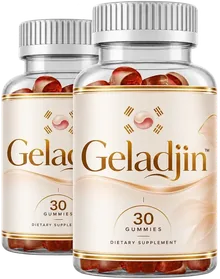
2 bottles
60 gummies · 60 days at 1 a day
$79per bottle
- Total
- $158
- Per day
- $2.63
- Shipping
- Shipping added at checkout (amount not published)
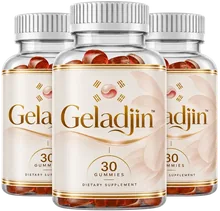
3 bottles
90 gummies · 90 days at 1 a day
$69per bottle
- Total
- $207
- Per day
- $2.30
- Shipping
- Free U.S. shipping
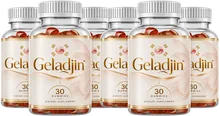
6 bottles
180 gummies · 180 days at 1 a day
$49per bottle
- Total
- $294
- Per day
- $1.63
- Shipping
- Free shipping reported
- Ask first if you take medicineDiabetes medicine or insulin, a water pill, digoxin, or low potassium: apple cider vinegar is on the label, and MedlinePlus lists these.
- Pick a package30 gummies a bottle, one a day by the label. 3 bottles ship free in the U.S., 6 bottles ship free as reported, and shipping on 2 is added at checkout.
- Read the totalCheck the address bar, the retailer name, the total and any add-on box. Keep the receipt.
- Mark day 60Plan on 60 days from the purchase date: we could not confirm when the seller starts counting. Keep the tracking email.


 Badges supplied by the seller, shown as supplied. None names a certifying body, lab or number; what each one would need to mean is on the badges page.
 Payment logos come from the seller's pack; we could not confirm which methods the checkout accepts. Order links are marked sponsored. If you take diabetes medicine, insulin, a water pill or digoxin, ask your doctor first.
What is the difference between a possible effect and a claim?
A claim is a promise a seller makes. A possible effect is what a source says might happen. The table shows how the two differ on this topic.
| Statement | Where it comes from | How to read it |
|---|---|---|
| "No claim about blood sugar" | The Geladjin label | The seller promises nothing on the bottle |
| Vinegar may lower after-meal blood sugar | MedlinePlus1 | A possible effect of vinegar, not a result for the gummy |
| Blood sugar might drop too low with antidiabetes drugs | MedlinePlus1 | A reason to ask before combining |
| Evidence is low quality and studies are small | Operation Supplement Safety2 | Hold any claim loosely |
| Claims need competent and reliable evidence | FTC guidance3 | Ask the seller for the study |
A possible effect becomes a reason for caution if you take medicine that also acts on blood sugar, and a reason for curiosity if you do not. It never becomes a promise. We do not tell anyone that Geladjin Gummies does anything for blood sugar.
What about the sugar in each gummy?
Each gummy has 3 g of added sugars, which the label gives as 6% of the 50 g Daily Value. That is small, and it still counts toward the day's added sugar.
The Harvard Nutrition Source says the Dietary Guidelines advise limiting added sugars to less than 10% of calories, about 50 g on 2,000 calories, and that the American Heart Association suggests no more than 24 g a day for most adult women and 36 g for most men4. Our math puts 3 g at 12.5% of 24 g and 8.3% of 36 g. The CDC says that consuming too many added sugars can contribute to weight gain, type 2 diabetes and heart disease5.
The label lists cane sugar and tapioca syrup among the other ingredients. Geladjin Gummies is not sugar-free or low-sugar, and one jar of 30 holds 90 g of added sugars by our math. If you track carbohydrates, include the 3 g of total carbohydrates per gummy. See our added sugar page.
| Item | What the sources say |
|---|---|
| Vinegar for weight or blood sugar | Not enough reliable evidence (MedlinePlus) |
| Ginger | Some evidence for nausea of pregnancy; no doses given for comparison (NCCIH) |
| Excess added sugar | Linked to weight gain, type 2 diabetes and heart disease (CDC, Harvard) |
| A 2024 vinegar trial | Retracted September 23, 2025 (BMJ Group) |
| Geladjin Gummies | No study found |
Research covers each ingredient alone, usually for other uses and at other amounts.
How do low potassium and diuretics fit in?
They are part of the same MedlinePlus caution. MedlinePlus says large amounts of apple cider vinegar taken long term are possibly unsafe and may cause low potassium, and that people with low potassium should not use apple cider vinegar1.
It also says low potassium may raise digoxin side effects, and that insulin and diuretics can both lower potassium1. Those are the reasons the medicine list on this page includes diuretics and digoxin and not just diabetes drugs. We could not confirm that the amount in one gummy would reach any of those effects, and we do not say it would. We only say to ask first. The same applies to any other supplement you take: tell your doctor about all of them, as NCCIH advises6.
What is not known about the gummy and blood sugar?
A lot is not known, and we would rather say so than guess. We found no study of Geladjin Gummies, so there are no published results on how it behaves in anyone, with or without diabetes.
We also could not confirm how the label's 5% acetic acid figure was measured. Our math gives about 12.5 mg of acetic acid per gummy if the 5% describes the 250 mg of vinegar, which is an estimate. A tablespoon of 5% household vinegar carries about 750 mg by the same math, so one gummy is a very different thing from the vinegar in most studies. That is not a dose and not a comparison of effect. It is a reminder that the research we cite does not map onto the gummy.
NCCIH, speaking of ginger, says to tell your provider about medicines because some herbs and medicines interact in harmful ways, and the page does not state study doses7. So the 1 mg of ginger on the label is not something we can place against research either.
What should you bring to your doctor or pharmacist?
Bring the bottle, the label photo and a short list of questions. This makes the visit quicker and the answers more useful.
- The Supplement Facts: 250 mg of apple cider vinegar (5% acetic acid) and 1 mg of ginger per gummy.
- The other ingredients, including cane sugar and tapioca syrup.
- The list of your medicines, including insulin, diuretics and digoxin if you take them.
- Your recent potassium results, if you have them.
- A question: is it safe to use this alongside what I take, and what should I watch for?
Keep the questions short and write down the answers. You can read more in the safety guide, and our science page explains why the evidence is limited.
Who should ask a doctor before using Geladjin Gummies?
Anyone taking diabetes medicine or insulin, a diuretic or digoxin, or anyone with low potassium, should ask a doctor before using Geladjin Gummies.
MedlinePlus says apple cider vinegar might lower blood sugar and potassium and lists interactions with those medicines1. It says not to use apple cider vinegar if you have low potassium1. Never start, change or stop a medicine because of this page.
If you are pregnant, nursing, under 18 or have a known medical condition, the label says to consult a physician. A supplement is not a substitute for medical care.
Blood sugar and medicine questions need a clinician who knows your history. This website cannot give medical advice; page questions go to [email protected].
Frequently asked questions
Is there a Geladjin blood sugar claim on the label?
No. The label makes no blood sugar claim, and we found no study of Geladjin Gummies.
Is Geladjin safe with diabetes?
We cannot say, and only your doctor can. MedlinePlus lists interactions between apple cider vinegar and antidiabetes drugs and insulin1.
What does apple cider vinegar and blood sugar research show for Geladjin?
MedlinePlus says apple cider vinegar may lower after-meal blood sugar, but also that there is no good scientific evidence for diabetes use1. That research is on vinegar alone, not on Geladjin Gummies.
Can I use Geladjin with my diabetes medicine?
Ask your doctor or pharmacist before you do. MedlinePlus says blood sugar might drop too low when apple cider vinegar is combined with antidiabetes drugs, so they should be monitored closely1.
Can diabetics take Geladjin, given the 3 g of added sugar?
Each gummy has 3 g of added sugars, a small amount that still counts toward the day's total4. Ask your doctor whether it fits your plan.
Sources for this page
D1 = the Geladjin sales page named in the owner pack (it did not load for us). D2 = an independent affiliate page that read the order page. S = U.S. government and NIH sources. Label facts come from the seller's label photo, which we read ourselves.
- S1 Apple cider vinegar (MedlinePlus herbs and supplements). MedlinePlus, U.S. National Library of Medicine. medlineplus.gov/druginfo/natural/816.html
- S3 Apple cider vinegar in dietary supplements (Operation Supplement Safety). Operation Supplement Safety (U.S. Department of Defense). www.opss.org/article/apple-cider-vinegar-dietary-supplements
- S12 Health Products Compliance Guidance. Federal Trade Commission. www.ftc.gov/business-guidance/resources/health-products-compliance-guidance
- S5 Added Sugar (The Nutrition Source, Harvard T.H. Chan School of Public Health). Harvard T.H. Chan School of Public Health. nutritionsource.hsph.harvard.edu/what-should-you-eat/added-sugar
- S6 Get the Facts: Added Sugars (CDC). Centers for Disease Control and Prevention. www.cdc.gov/nutrition/php/data-research/added-sugars.html
- S7 Using Dietary Supplements Wisely. NCCIH. www.nccih.nih.gov/health/using-dietary-supplements-wisely
- S2 Ginger (NCCIH). National Center for Complementary and Integrative Health (NIH). www.nccih.nih.gov/health/ginger
Last updated November 28, 2026. Facts come from the label photo we read, the owner pack, an affiliate page that read the order page and the public U.S. sources above; prices were checked November 28, 2026. Spotted an error? Email [email protected].